
About
Representation
View all Representation →Consultations- Digitisation Taskforce – Final Report
- FCA Consults on Fund Product Information and Cost Disclosure CP24/30 – ShareSoc Responds
- FRC Consults on UK Stewardship Code – ShareSoc Responds
- FCA Consultation – Modernising Redress
- HMRC Consultation – IHT on Pensions
- ShareSoc Evidence to Lords on FCA Enforcement
- ShareSoc supports FCA proposal for criminal background checks on owners and controllers of financial institutions
- UK ISA: ShareSoc submits consultation response
- FCA Consultation on Enforcement Practice & Transparency
- ShareSoc response to House of Commons Education Select Committee
- UKSA and ShareSoc Submission to Labour Party Review of Financial Services
- FCA Consultation GC23/2 Financial Promotions on Social Media
- VIEW ALL CONSULTATIONS
Education
Events
View all Events →Upcoming Events- Oct21ShareSoc Webinar with The European Smaller Companies Trust (ESCT)
- Oct27Asset Match webinar on PISCES: what it means for liquidity in private company shares
- Oct27SIGnet North Leeds / Harrogate / Skipton Group Launch Meeting
- Oct30ShareSoc Webinar with JPMorgan Asia Growth & Income plc (JAGI)
- Forums
Zanaga Iron Ore (AIM: ZIOC): Investors brought in to build the mine, now taking control of it
ShareSoc asks AIM Regulation and the FCA to examine the Red Arc Minerals deal before shareholders vote
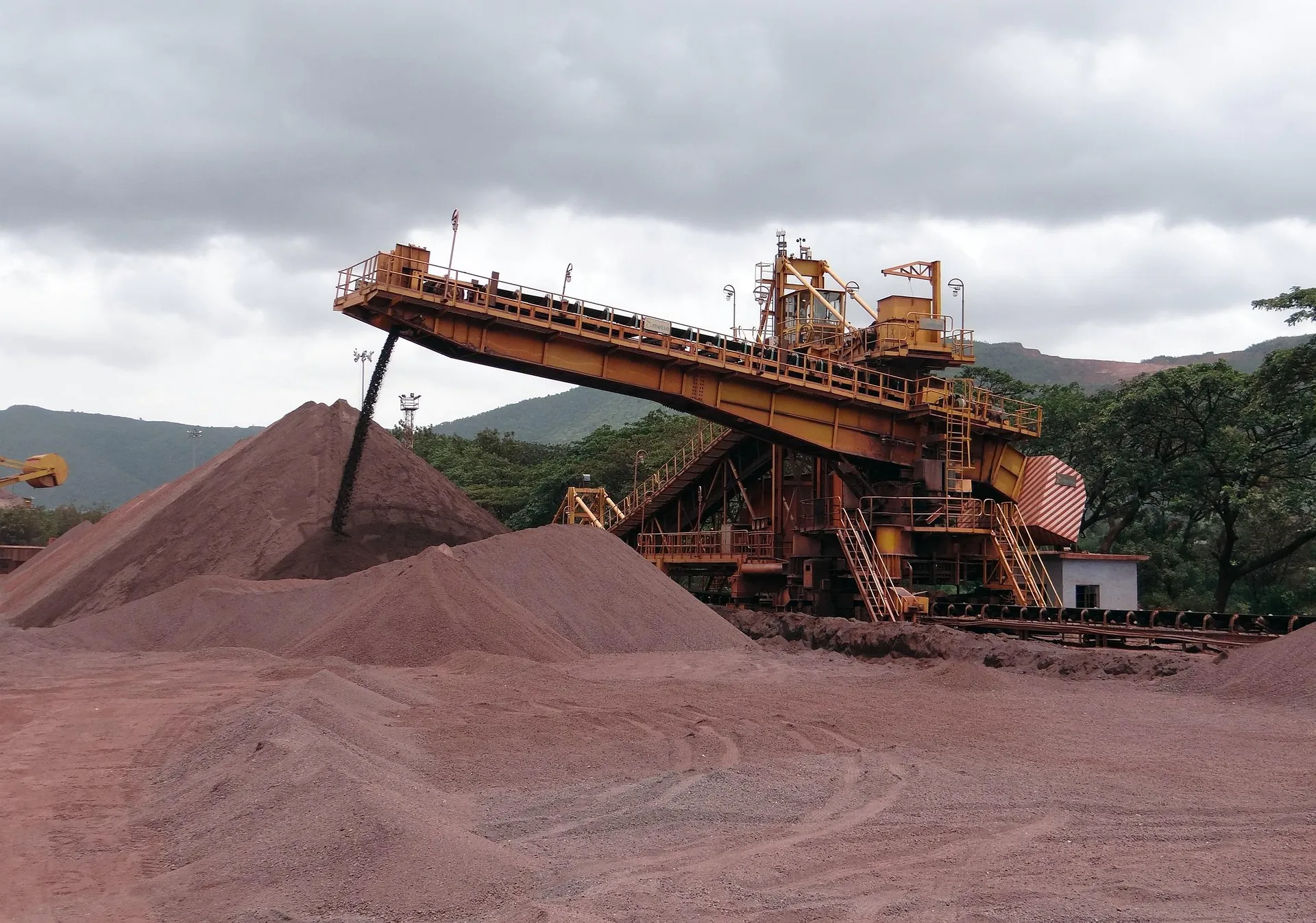
Zanaga Iron Ore Company (ZIOC) has been quoted on AIM since 2010. Its only material asset is the Zanaga Project in the Republic of Congo, a fully permitted iron ore development with a 6.9 billion tonne resource which, the Company says, “could establish Zanaga as one of the world’s largest iron ore mines”. For most of ZIOC’s time on AIM, control of the Project sat with Xstrata and then Glencore. In 2022, ZIOC agreed to regain full ownership in exchange for new shares.
In March 2025, ZIOC raised US$23 million at around 4.1p a share from a group of new investors and used US$15 million of that raise to buy back and cancel Glencore’s 43% stake. ZIOC presented the new investors as bringing the industry standing the Project needed. Greymont Bay was the cornerstone investor. Sir Mick Davis who, as Xstrata’s chief executive, led its acquisition of control of the Project in 2011, was named as a key investor.
Eleven months later, Red Arc Minerals (“RAM”), founded by Sir Mick Davis and controlled by Greymont Bay’s manager, Heeney Capital, signed a binding term sheet to take up to 87.5% of the Project. It looks to do this without making an offer for a single ZIOC share.
The deal in brief
RAM would pay US$25 million into Jumelles, the subsidiary that owns the Project, for 20%.
It would then have an option to buy a further 67.5% of Jumelles from ZIOC for US$125 million, taking control of the subsidiary’s board at 50.1%.
ZIOC would be left with 12.5% of the Project, the US$125 million, a 1% royalty half of which RAM can buy for US$50 million, and a Jumelles board seat (which it loses if its stake falls below 5%).
ZIOC has identified RAM as a related party. It states that RAM is “controlled by Heeney Capital”, which also “controls and makes all investment decisions for” Greymont Bay I LLC and Regatta HCRP I LP, which together hold 21.2% of ZIOC.
ZIOC has declared a “Heeney Capital or Red Arc Minerals related Concert Party”, holding around 28% of ZIOC. The declaration also mentions Mark Cutifani, a ZIOC shareholder and an adviser to both Heeney Capital and Greymont Bay, but does not clarify whether he is a concert party member.
Our concerns
Control of ZIOC’s only material asset would pass to a related party without an offer to shareholders, at a price fixed before the Project is de-risked and untested in the market, and without the independent safeguards a board would normally put in place to protect minority shareholders.
We have raised this with AIM Regulation and the FCA and put detailed questions to ZIOC. Its response, reproduced at the foot of this article, answered none of them. The facts in this article are drawn from the company’s own announcements and presentations.
1. Control without an offer
Because RAM buys into the subsidiary rather than acquiring ZIOC shares, Regulation 33 (the provision in ZIOC’s Articles that allows the Board to require an offer to all shareholders) is not engaged, regardless of how much control of the group’s business is transferred.
At the one point where Regulation 33 could bite — if RAM’s Jumelles shares are exchanged for ZIOC shares at 15p — the Board has agreed in advance not to use it.
We have asked when the concert party formed. ZIOC dates it to February 2026, but the core members held nearly 30% by the end of 2025. In September 2025, the company agreed lock-ins over their shares at the request of an unnamed “potential investor”. Regulation 33 is triggered by acquisitions, so the timing matters.
Shareholders will get a vote under AIM Rule 15. But a vote is not an offer: it passes by a simple majority, the concert party can vote, and those on the losing side have no way out. If that vote approves both tranches, shareholders will have settled the transfer of control up to around three years before it happens.
2. A price fixed early, and never tested
RAM’s first US$25 million pays for the work that de-risks the Project. The price at which RAM can take control was fixed in February, before that work was done, and RAM need only exercise if the price has turned out to be advantageous. The de-risking is already under way: in July RAM reported a letter of intent for up to US$500 million of project financing.
The price has not been tested. On 12 March chief executive Martin Knauth told investors: “The lots of entities that we have been engaging with have also been very clear that they would only invest at the asset level and then also as part of a consortium” (recording, at 3m33s).
If lots of entities wanted in, there was a market. Yet ZIOC signed exclusively with a related party and has disclosed nothing about any other proposal. It has also agreed that if a rival offer is announced before the vote and shareholders reject RAM in favour of it, RAM takes 10% of the rival’s consideration.
ZIOC’s March teach-in describes the initial tranche as “equivalent to an equity raise at 15p per share (>150% premium)”. But that is the price only if RAM walks away. If RAM proceeds, by our calculation on the company’s own figures it pays the equivalent of approximately 9p a ZIOC share for its first 20%; and the same US$25 million also buys an option over the second tranche. In our view, headlining the fallback price gives shareholders an incomplete picture.
3. Minority shareholders left exposed
If both tranches complete, ZIOC becomes a 12.5% minority holder in a project controlled by RAM. If RAM then pursues a sale of Jumelles above an undisclosed valuation threshold, or proceeds with financing construction of the mine, the announcements say ZIOC will be “required to participate on the terms set out in the definitive documentation”, terms shareholders have not seen. The presentation to investors speaks instead of ZIOC’s “right to fund, or sell”. The company has not explained the apparent inconsistency.
The US$125 million goes to ZIOC, not to its shareholders, and ZIOC says it is roughly what it would need to fund its share of construction. So the cash either goes back into the Project to stand still, or it does not, and ZIOC is no longer in the business of building the mine.
The Board has announced none of the safeguards shareholders would expect in a structure of this nature: no independent committee, no independent valuation, no market test, and no vote confined to independent shareholders.
The Board’s composition does not reassure. Philip Mitchell joined the Board as Greymont Bay’s appointee and is a declared concert party member, yet the Board describes him as independent “notwithstanding the criteria set out in Code Provisions 10 and 11”.
Andrew Trahar, ZIOC’s investor relations manager and also a declared concert party member, has the Board’s consent to act as a consultant to RAM.
What we expect the Board to do
If investors will come in only at asset level, the Board’s job is to protect the shareholders who cannot follow them there. Before any vote, we expect:
- An independent committee of directors with no connection to RAM, Heeney Capital or the concert party, with its own advisers.
- A tested price: an independent valuation of the Project and of RAM’s option, a genuine market check among the “lots of entities” the chief executive described, and no penalty on shareholders for preferring a better offer.
- A vote of independent shareholders only, with the second tranche put to a separate vote when RAM seeks to exercise it.
- Protection for what ZIOC keeps: no forced sale or financing without independent approval and a fair-value floor, and a board seat that does not vanish at 5%.
- Full disclosure: who owns RAM and Gulf Iron & Steel, which holds marketing rights over 20% of the Project’s output; when each concert party member acquired its shares; and whether and when the Board considered Regulation 33.
ZIOC’s response
On 22 September we wrote to the Board with a detailed list of questions covering the matters in this article, and invited ZIOC to comment before publication. The company replied through its public relations adviser on 25 September with the following statement, which we publish in full:
“The Company has made all disclosures required of it under the AIM Rules and MAR to date, and will continue to comply with its disclosure obligations, including in connection with the proposed Red Arc Minerals investment (“Proposed Transaction”), as they arise.
“As the Company concludes the definitive long-form documentation, ZIOC Shareholders will have the opportunity to review the terms of the Proposed Transaction in a circular, and subsequently vote on the Proposed Transaction.
“The Company continues to believe this to be the best option to progress the project to a Final Investment Decision and deliver significant value for shareholders. Throughout the process, management has sought to engage with shareholders to explain the rationale for the Proposed Transaction and provide an opportunity for shareholders to ask questions and better understand its strategic benefits.”
ZIOC has not answered any of the detailed questions we put to it. We will publish any further response it wishes to make.
The bottom line
The Project plainly needs partners. Our concern is that control of ZIOC’s only material asset should not pass to a related party, at an untested price, without shareholders being offered a way out or, at the very least, without the independent process that would show the price is fair.
Shareholders should read the circular closely when it arrives, and vote.
We’re watching developments closely.
11 Comments
Leave a Comment Click here to cancel reply.
This site uses Akismet to reduce spam. Learn how your comment data is processed.
Become a free Associate ShareSoc member
Enter your email to sign up as a free Associate ShareSoc member and receive our emails. It takes a few seconds — and on the next page you'll have the option to customise your membership.
Thank you for acting on this cause. The five points set out above can’t be seen as anything other than reasonable. Time for the board to act in their duties towards all shareholders.
Thank you for taking up this issue with various regulators and ZIOC themselves.
I find it particularly galling that ZIOC claim to have been engaging with shareholders and that they have provided opportunities for questions to be asked – when in reality we as private shareholders are still in the dark about so much – who is behind Gulf Iron & Steel with their 20% offtake, where are the TR1s for large investments etc, despite us having asked repeatedly.
Even if we wind up getting the short end of the financial stick, hopefully your involvement will lead to more disclosure, so we can at least discover who is taking most of the pie themselves.
Hi
I have been a Zioc shareholder for 10 years now and feel utterly betrayed and swindled by the company. There is something very dodgy going on that stinks to high heaven and it’s ordinary shareholders who are being shafted because of it (the RAM “deal” more like steal).
I’d like to thank ShareSoc for taking an interest in this case and putting legitimate questions to the Zioc board. Please continue to put the pressure on Zioc on behalf of it’s retail shareholders. Thank you so much.
Excellent article and summary, and thank you to your team for the work that you are doing attempting to hold Zioc and their so called board of directors to account.
The way this company is now being run in relation to their “partnership with RAM” ..whoever they are from what we have been told, is an outright disgrace if they are allowed to get away with it.
I have been a long term shareholder in ZIOC for at least 8 years, with my investment in Zioc being part of my personal pension plan.
When I met and shook hands with ZIOC management last year I did not imagine that my 9 year journey as an investor would lead to this outgageous ‘RAM-raid’. Many billions of NPV picked-up by fat cats for such an insulting amount. Shame on them for even trying this. Shame on them for pretending it’s a good deal for shareholders.
I am aligned with the points presented by Extrader, Sharesoc and the comments from others. I am grateful for Extrader’s energy and determination in pursuing justice for fellow private investors. Thank you also to Sharesoc for picking it up.
Sadly, I rather suspect that greed will prevail and have adjusted my portfolio accordingly. 9 years of patience, support, hope and recent dilution all for this RAM-raid. Outrageous.
This episode casts AIM in an even dimmer light than I thought possible. BVI incorporation and AIM-listing have to be red flags for me in future IMO.
Thank you for shining a light on these disgraceful and abhorrent crooks whom wish to steal from the hard working investor. Zanaga was the first AIM share I bought, I have held for over 10 years, worked a regular job I have a young family and wanted to provide. I have invested a substantial sum and looks likely I will be left with very little. I understood the initial risks of the investment but I have been completely blindsided by these white collar crooks I feel totally helpless.
It’s at least a little reassuring to know at least there is a body of people trying to fight the good fight and bring these chancers to account.
As a longstanding shareholder of Zioc I feel completely ripped off by our board of directors who I don’t feel have acted in the best interests of shareholders like myself.
I’d like to thank ShareSoc for scrutinising this dreadful RAM deal and asking pertinent questions of Zioc directors.
There must be hundreds if not thousands of small investors like myself who feel utterly helpless and wronged.
I hope you are able to put pressure on Zioc for it to account for it’s actions.
As a long-term ZIOC shareholder, I want to thank ShareSoc for challenging this murky deal and standing up for minority shareholders. In particular I find the conflicts of interest and overlapping roles surrounding this transaction to be deeply troubling. Thank you for holding the company to account. Please keep pushing for answers.
Extremely disappointed at the way this company has behaved. They have sold 87.5% the of asset to an unknown consortium controlled by their mates. No one knows who all the owners of Red Arc are however, or what their financial assets are, certainly not the shareholders of Zanaga. One of the investors in one of the vehicles, Greymont, is the father of Andrew Trahar, indeed Trahar Jnr also seems to have been working for Red Arc. Whilst it is difficult to prove for an ordinary private investor such as myself I would like to know if there has been any sort of unfair prejudice against Zanaga holders. The investigation should also include the sale to Greymont – again conducted by Trahar junior at a very low price again sold to Trahar Snr and mates. The deal was conducted by Trahar Jnr at half the share price that the stock was trading at the time they also gave away a 20% offtake for free. The deal with Trahar’s family and friends seemingly had no competitor bid and Trahar junior did not recuse himself from this transaction. Presumably like most sons he is a beneficiary of his father’s estate therefore giving company assets to his father may be directly beneficial to him in the long run so it seems unusual that he would not be required to recuse himself from this type of a transaction. The Nomads waived this all through. It all needs looking into to make sure share holders have been treated fairly and that good governance has been applied to all of these asset transfer related transactions and that shareholders have not been subjected to any unfair prejudice in any of these transactions.
As a long term shareholders. I would love this little concert party to be given a little scrutiny ina public forum.
In my opinion this is a well orchestrated stich up with the small private investors getting stuffed by Mick and his mate.
What was wrong with progressing along a straightforward route where everyone got a fair share of risk and reward?
Huge thank you to ShareSoc for taking this up and pressing for answers on behalf of shareholders.
I first got into Zanaga just after the environmental permit was granted. Like Brett, I too have a young family and invested heavily, believing in the asset and trusting the board and “mining luminaries” they brought in at a massive discount to help secure offtake and financing. Now, many from that same group are either behind RAM or in a late-declared concert party linked to it. I feel utterly betrayed.
It’s astonishing to think that after 15 years of development, feasibility studies, full permitting, and estimated pro forma sunk costs of US$767m, the board is backing a proposal for RAM to take almost complete ownership of our project for a cash consideration of roughly 3.1% of its NPV. Even the Xstrata arrangements at listing back in 2010 provided for an acquisition price linked to project NPV, with recourse to an independent valuer. That we now face this proposal with fewer safeguards, no independent valuation and no proper market test is indefensible.
Then you have the extraordinary overlapping relationships involving RAM, major shareholders, company directors and advisers – the board has even authorised one concert party member, Andrew Trahar, to advise RAM. Amid all this, we still do not know RAM’s full beneficial ownership and cannot be sure when the concert party formed or who all its members are. You couldn’t make it up.
The board should be ashamed that shareholders have had to turn to ShareSoc to press for such basic safeguards. The FCA and AIM Regulation need to investigate the concerns raised by ShareSoc and the roles of the individuals involved.