
About
Representation
View all Representation →Consultations- Digitisation Taskforce – Final Report
- FCA Consults on Fund Product Information and Cost Disclosure CP24/30 – ShareSoc Responds
- FRC Consults on UK Stewardship Code – ShareSoc Responds
- FCA Consultation – Modernising Redress
- HMRC Consultation – IHT on Pensions
- ShareSoc Evidence to Lords on FCA Enforcement
- ShareSoc supports FCA proposal for criminal background checks on owners and controllers of financial institutions
- UK ISA: ShareSoc submits consultation response
- FCA Consultation on Enforcement Practice & Transparency
- ShareSoc response to House of Commons Education Select Committee
- UKSA and ShareSoc Submission to Labour Party Review of Financial Services
- FCA Consultation GC23/2 Financial Promotions on Social Media
- VIEW ALL CONSULTATIONS
Education
Events
- Forums
ShareSoc Director Spotlight – Vijay Tohani
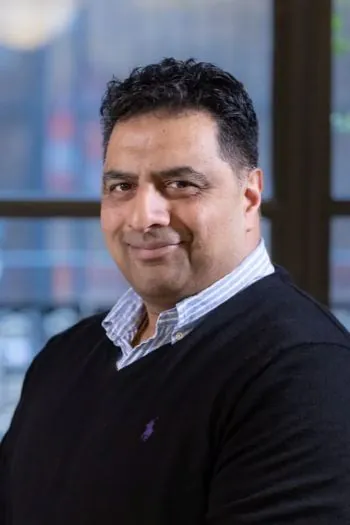
What inspired you to join ShareSoc’s board and what motivates you to represent retail investors?
I have seen the investment industry from both sides of the table. I spent over twenty years as a professional investor in emerging markets within large institutional houses, working in London, Edinburgh and Singapore, with stints in risk management and financial regulation before moving into academia. Today, I am a university lecturer teaching finance and investing, and I invest my own money as a private investor like everyone else reading this.
Crossing over taught me something I could never have learned from inside an institution. When I wanted to understand a company as an institutional investor, I could ask for a meeting with its chief executive and usually have one within the week. A private investor who owns the same company through a nominee account may not receive the annual report, may struggle to vote their shares and will almost certainly never speak to management. We are buying the same stock but are not always treated as the same kind of owner.
The Woodford and Hartley cases are reminders of how exposed minority shareholders can become when there is no effective collective voice acting on their behalf. ShareSoc exists to help correct that imbalance, and it is a remarkably unusual institution. It is a national, member-funded not-for-profit body that represents individual shareholders, provides investor education and brings together a nationwide network of investor groups through SIGnet. Very few countries have anything comparable, which is exactly why I wanted to become involved.
ShareSoc is led by volunteer directors. How do you think this shapes the organisation’s values and campaigns?
ShareSoc does not operate for profit, and its directors are not paid for their time. That matters more than it might sound because it removes the commercial pressures that shape so much of what private investors see and read.
Most information that reaches investors, whether it is a research note, a platform newsletter or a fund manager’s outlook, comes with some form of commercial incentive behind it. Somebody, somewhere, is being paid for you to read it.
We are not. Nobody at ShareSoc is defending a revenue line or promoting a product. When we take a position on a governance failure, a regulatory issue or the erosion of shareholder rights, we do so because we believe it serves investors’ interests. In a crowded and often conflicted market, that independence is one of ShareSoc’s greatest strengths. Trust takes years to build and moments to lose.
I am also continually impressed by the breadth of expertise within the organisation. Around the board table there is experience spanning law, investment banking, asset management, regulation and education. The backgrounds could hardly be more diverse, but the commitment to improving outcomes for private investors is shared by everyone.
How have you seen ShareSoc evolve and what’s one insight you’d pass on to newer investors?
I have been investing for nearly thirty years, and although I learned the craft alongside institutional investors and excellent mentors, I am still learning.
One lesson stands out above all others: being right and being paid for being right are two very different things.
I have held investment theses that were entirely correct and still lost money on them because market conditions overwhelmed the fundamentals for far longer than my conviction could survive. Whether during the Asian financial crisis, the dot-com bubble or the global financial crisis, I have owned businesses with strong earnings and healthy balance sheets that nevertheless suffered badly when sentiment turned.
My advice to newer investors is to treat investing as a lifelong education. The people who come unstuck are rarely those who know too little. More often, they are the ones who believe they have finished learning.
I would also encourage investors not to go it alone. Investing in isolation can be both lonely and expensive. Nobody challenges your assumptions, nobody points out when you have become emotionally attached to a holding, and nobody talks you out of selling in a panic at the worst possible moment. That is one reason organisations such as ShareSoc matter. Through our seminars and the SIGnet network, investors can learn from one another and become better decision-makers together.
As a new member of the board, what unique experiences or perspectives do you bring, and how do you see those shaping ShareSoc’s work this year?
I have been fortunate to see investing from several different perspectives, and each has taught me something useful. I have worked as an institutional investor, in risk management, in financial regulation and now in academia. At the same time, I remain a private investor making my own decisions, and occasionally my own mistakes, alongside everyone else.
What I hope to bring to the board is the ability to bridge those different worlds. Understanding how institutions think, how regulators operate, how investors learn and where individual shareholders often find themselves disadvantaged can help ShareSoc engage more effectively with policymakers, companies and investors alike.
ShareSoc is at its most effective when it combines credibility, expertise and independence. If I can contribute to strengthening that voice and helping advance the interests of private investors, I will consider that a worthwhile contribution to the organisation’s work this year.
This site uses Akismet to reduce spam. Learn how your comment data is processed.
Become a free Associate ShareSoc member
Enter your email to sign up as a free Associate ShareSoc member and receive our emails. It takes a few seconds — and on the next page you'll have the option to customise your membership.